
Minimalist Kitchen Design for Clean Living
Minimalist Kitchen Design for Clean Living in today’s fast-paced world, visual noise has become a common stressor. Consequently, many homeowners are turning to clean, intentional interiors to create calm amidst the chaos. Nowhere is this shift more evident than in the kitchen. A well-crafted minimalist kitchen design promotes clarity, order, and peace—an aesthetic that supports both modern living and mindful habits.
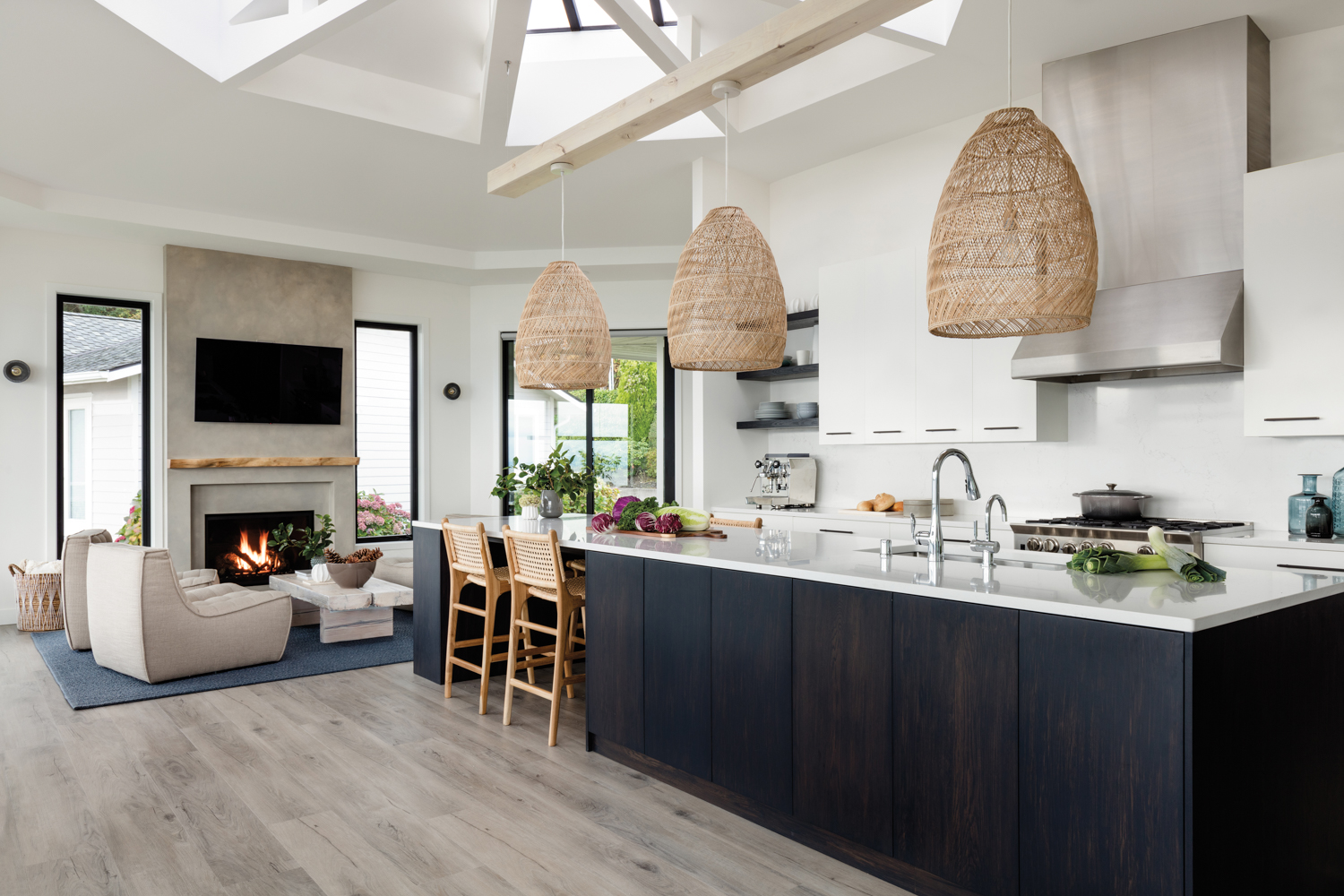
The Art of Subtraction
At its core, minimalist kitchen design isn’t about having less for the sake of austerity. Instead, it’s about stripping away the superfluous to highlight what truly matters. As a result, every surface, fixture, and feature is intentional.
Gone are the days of overcrowded countertops and overly ornate cabinetry. Clean lines, flat panels, and concealed hardware dominate, allowing form and function to work harmoniously. Moreover, the visual quietude encourages a more serene cooking experience.
A Palette That Calms the Mind
When it comes to color, minimalism leans toward subtlety. Therefore, whites, soft greys, muted beiges, and pale neutrals set the tone. These hues serve as a clean backdrop, helping natural light to bounce throughout the room while creating a sense of space.
Additionally, contrast is introduced sparingly. A matte black fixture or brushed brass detail adds dimension without overwhelming the aesthetic. As a result, the palette feels elegant, yet unpretentious.
Functional Layouts That Flow
Efficiency is the backbone of every great kitchen. Consequently, minimalist kitchen design follows clear, logical layouts. The work triangle—connecting the sink, stove, and refrigerator—remains central, but with refined lines and unobtrusive transitions.
Islands serve multiple purposes, often doubling as seating, storage, or even a remote workstation. Furthermore, the lack of visual clutter enhances navigation and usability.
Thoughtfully Hidden Storage
Because minimalism champions order, effective storage is non-negotiable. Full-height cabinets, built-in pantries, and hidden drawers ensure that everything has its place. As a result, countertops remain pristine, and the room maintains its tranquil atmosphere.
Open shelving, if used at all, is reserved for select display items. A few handmade ceramics or a wooden cutting board might be featured, but always with curation in mind. Thus, beauty emerges from simplicity.
Materials That Ground and Inspire
Natural materials are favored not only for their tactile warmth but also for their honest appeal. Stone, concrete, wood, and metal—when used thoughtfully—introduce subtle texture. Consequently, these elements bring depth without disturbing the design’s clean lines.
For example, a smooth concrete floor can contrast beautifully with matte oak cabinetry. Likewise, a soapstone countertop adds richness, while aging gracefully over time. These material choices speak to the longevity that minimalist kitchen design often embodies.
Lighting as Sculpture
Light is more than illumination in minimalist spaces—it’s an architectural element. Therefore, maximizing natural light is key. Expansive windows, clerestories, or skylights bring in softness and warmth.
At night, layered lighting ensures functionality without glare. Recessed LEDs, pendant fixtures, and under-cabinet strips all work in tandem to guide the eye. Moreover, the deliberate absence of visual noise makes each fixture stand out like a sculptural piece.
Integrated Technology, Seamlessly Executed
Modern kitchens require technology, but minimalist ones demand discretion. That’s why minimalist kitchen design favors built-in appliances and hidden integrations. Induction cooktops, flush-mounted ranges, and panel-ready dishwashers disappear into the cabinetry, preserving the space’s purity.
Additionally, smart systems—from voice-controlled faucets to app-linked ovens—offer convenience without clutter. This balance between innovation and invisibility keeps the space both forward-thinking and calming.
Negative Space That Serves a Purpose
In minimalist kitchens, what you don’t see is just as important as what you do. Empty space isn’t wasted; it’s a design tool. It provides breathing room, enhances flow, and invites a sense of peace.
Between floating shelves, around an island, or above cabinets, these voids create rhythm. Consequently, the room feels larger and more comfortable, even if the square footage is modest.
Sustainable Choices with Substance
Minimalism often aligns with sustainability. Fewer, higher-quality materials mean less waste and longer lifespans. Additionally, materials like bamboo, recycled stone, and low-VOC finishes are popular in eco-conscious design.
By choosing durable, ethical products, homeowners support clean living not just visually, but environmentally. Thus, minimalist kitchen design becomes both a personal and planetary commitment.
Personal Touches with Precision
Minimalism doesn’t mean personality is sacrificed. On the contrary, it allows carefully chosen items to shine. A handmade vase, a vintage stool, or a framed art piece becomes a focal point—not because it’s loud, but because it’s intentional.
Plants are especially effective here. A single Monstera or trailing pothos adds vibrancy without visual disruption. Furthermore, greenery supports the “clean living” philosophy by purifying the air and offering a natural aesthetic.
Lifestyle Benefits Beyond the Surface
Beyond appearances, minimalist kitchen design enhances lifestyle. With fewer distractions, tasks become more efficient. With less clutter, stress levels decrease. Ultimately, cooking becomes a more mindful activity.
In many homes, the kitchen is the central hub. Therefore, when this space is serene, the whole household benefits. Clean design supports clean habits—both physical and mental.
Minimalism isn’t about absence; it’s about essence. Through thoughtful design, intentional color, hidden functionality, and honest materials, minimalist kitchen design creates a space that supports both clean living and soulful dwelling. When every inch is deliberate, the kitchen transforms—not just into a place to cook, but into a sanctuary of peace, purpose, and possibility.


